A mini split that runs for hours isn’t automatically in trouble. Inverter-driven heat pumps are designed to adjust their output and may run for long stretches to keep a room comfortable. But if the system runs nearly nonstop and still can’t reach the set temperature, it may be undersized—or dealing with another problem that looks like undersizing.
The distinction matters. A genuinely undersized unit may struggle through hot afternoons or cold nights, use more electricity than you expected, and wear harder while leaving the room uncomfortable. A dirty filter, refrigerant issue, poor installation, or heat loss through the building envelope can cause similar symptoms. Here’s how to tell the difference, what nonstop operation means for operating cost, and what to consider before replacing or adding equipment.
What “DIY mini split” means in 2026
A DIY mini split is generally a ductless heat pump marketed for homeowner installation, often with precharged refrigerant lines or quick-connect fittings. “DIY” does not mean every part of the job is tool-free or exempt from local rules. You still need to mount the indoor and outdoor units securely, route and protect the line set, seal the wall penetration, provide a condensate drain, and meet the equipment’s electrical requirements.
In many installations, the outdoor unit needs a dedicated circuit sized according to its nameplate and the manufacturer’s instructions. A plug-in connection is appropriate only when the specific equipment is designed and listed for it. Electrical permits and inspections may also apply. Follow local code and manufacturer instructions; hire a licensed electrician for work beyond your training or what local rules allow.
There are practical installation details that product photos don’t show. The line set needs to follow the manufacturer’s minimum and maximum length limits, and excess tubing cannot simply be crushed or sharply kinked behind the unit. It may need to be routed or coiled according to the installation manual, with bends and coil placement handled carefully. Drain slope, outdoor-unit clearances, snow exposure, and service access also affect how well the system works.
Undersized mini split symptoms to watch for
The strongest clue is not simply that the heat pump runs constantly. It’s that it runs for a long time while the room remains substantially short of the set temperature during the kind of weather the system is meant to handle.
- The room never reaches the set point: A bedroom stays several degrees too warm on a hot afternoon, or a garage remains chilly despite continuous heating. Comfort drops during extreme weather: The system copes on mild days but falls behind during a heat wave or a cold snap. Some areas stay uncomfortable: Open doorways, high ceilings, poor airflow, or a distant room can leave parts of the space outside the indoor unit’s effective air stream. The system rarely cycles down: It keeps operating at or near its capacity rather than easing off after the room stabilizes. Supplemental heat or cooling is needed often: Portable heaters or window units become regular helpers, not occasional backups.
Compare the room temperature with the unit’s set point using a separate thermometer placed away from supply air, sunlight, and exterior doors. Note the outdoor temperature and how long the system has been running. One bad afternoon does not prove a sizing problem. A pattern across similar weather conditions is more useful.
Why a mini split can’t keep up
Capacity is only one part of the story. A system can be correctly sized on paper and still underperform because of installation, maintenance, or building conditions.
First, rule out airflow and maintenance issues
Check and clean the indoor filter as directed in the manual. Make sure curtains, furniture, or stored items aren’t blocking the indoor unit’s air inlet or outlet. Outdoors, clear leaves, lint, snow, and other obstructions from around the condenser while preserving required clearances. A dirty coil, clogged drain, or damaged fan can also reduce performance.
If the system has a fault code, unusual noise, ice that doesn’t clear during a normal defrost cycle, or a sudden change in performance, consult the installer or manufacturer. Refrigerant work is not a DIY troubleshooting step. Low refrigerant can indicate a leak or installation problem and should be diagnosed by a qualified technician.
Then consider the room and the load
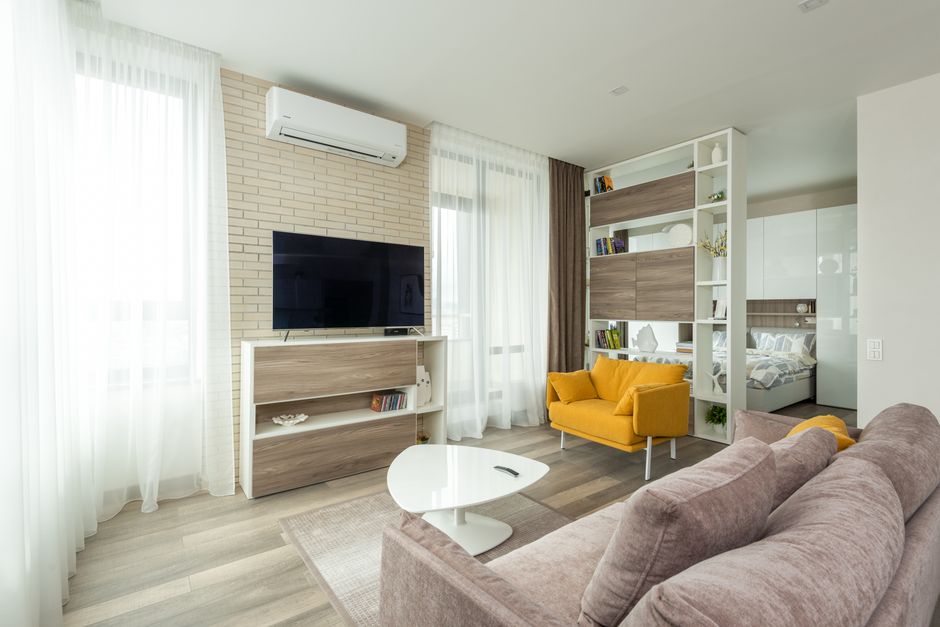
A garage often loses heat through an uninsulated door, air leaks, and a slab. A sunny bedroom with large windows can gain more heat than its floor area suggests. Ceiling height, insulation, air leakage, window exposure, occupancy, and local design temperatures all affect the heating and cooling load.
That’s why choosing a unit from square footage alone is risky. A room-by-room load calculation—often called a Manual J calculation in residential work—gives a more reliable basis for sizing. Oversizing isn’t a safe fix, either: it can cause short cycling, uneven comfort, and poorer humidity https://homesandexterior.com/best-diy-mini-split-heat-pump-2026-mrcool-vs-competitors/ control in cooling mode. For a multi-room house, one wall-mounted head may also fail to distribute conditioned air through closed doors, even when its capacity is adequate for the total square footage.

Does nonstop operation mean a huge electric bill?
Not necessarily. Inverter mini splits can modulate their compressor output instead of switching fully on and off like many older systems. During steady weather, a properly selected unit may run for long periods at partial output, which can be normal and efficient.
The concern is when a system is working near its limit and still cannot maintain comfort. It may then draw substantial power for extended periods, while a backup heater or another air conditioner adds to the bill. Actual cost depends on the unit’s power draw, local electricity rates, outdoor temperature, set point, insulation, and how much of the day it runs. “Runs nonstop” alone is not enough information to calculate the bill.
SEER2 is a seasonal cooling-efficiency rating, not a direct promise of a specific monthly bill. Higher SEER2 can reduce cooling energy use under standardized test conditions, but it does not make an undersized system capable of meeting a larger load. For heating performance, compare the unit’s heating capacity and efficiency at low outdoor temperatures, not just its cooling SEER2 rating or its headline capacity at mild conditions. Ask for the manufacturer’s performance tables at your local winter design temperature.
What to compare Why it matters What to ask for SEER2 Indicates seasonal cooling efficiency under standardized conditions The full system’s SEER2 rating and available capacity at your expected summer conditions Low-temperature heating capacity Shows how much heat the unit can deliver as outdoor temperatures fall Capacity and efficiency at specific outdoor temperatures, including local design conditions Electrical requirements Determines whether the home’s circuit and disconnect arrangement are suitable Nameplate data, required breaker or overcurrent protection, and applicable installation instructions Installation details Incorrect line-set routing, drainage, or clearances can impair operation Line-set limits, drain plan, outdoor-unit placement, and commissioning checklistCold-climate performance and Hyper Heat
Cold-climate performance deserves special attention if the mini split is your main heat source. Heat pumps generally deliver less heating capacity as outdoor temperatures fall, though the exact curve varies by model. Two units with the same advertised capacity may behave very differently on a freezing night.
Look for published low-ambient heating data, including capacity and efficiency at the temperatures relevant to your area. Ask whether the unit can maintain its rated output at those temperatures, whether it needs supplemental heat, and how defrost cycles affect comfort. The phrase “works in cold weather” is too vague to guide a purchase.
Hyper Heat is a name associated with Mitsubishi Electric’s cold-climate heating technology; it is not a generic label for every mini split. Compare specific model performance rather than assuming another brand’s product has identical capabilities. In regions with severe winters, a properly sized cold-climate system may still benefit from a backup heat plan for extreme conditions or equipment downtime.
Zone Air vs. MRCOOL: what’s the value tradeoff?
When comparing a local HVAC provider such as Zone Air with a DIY-oriented brand such as MRCOOL, compare the complete installed outcome—not just the price of the equipment. A lower equipment price may appeal to a capable homeowner, but a professional quote may include load calculations, electrical coordination, installation labor, startup checks, and a clear service contact. The exact scope depends on the contractor and quote.
For MRCOOL, confirm the exact model, included line-set configuration, warranty terms, and what the warranty requires if you install it yourself. Read the fine print before buying: registration deadlines, proof-of-purchase requirements, exclusions, and who handles parts or labor can affect the real value. Trustpilot’s mrcool.com reviews can offer a snapshot of customer experiences, but reviews are not a substitute for the written warranty or a check that a review concerns the same product and support issue you’re researching.
With Zone Air, ask for an itemized proposal showing the model numbers, sizing basis, electrical scope, line-set routing, permits, commissioning, warranty coverage, and service terms. Don’t assume any one contractor includes all of those items automatically. A useful comparison is the total cost of a correctly sized, properly installed system plus the support you expect to need—not a brand-versus-brand slogan.
Can Google Assistant fix a system that runs constantly?
Google Assistant can make it easier to change a compatible thermostat or control, set schedules, or check a temperature by voice. Compatibility depends on the mini split, its Wi-Fi adapter or thermostat interface, and the control platform. Verify the specific model and integration before buying; Google Assistant cannot add capacity to an undersized unit or correct an installation defect.
What to do if your mini split can’t keep up
Record the conditions. Write down the indoor temperature, set point, outdoor temperature, operating mode, and run time over several days. Check basic airflow. Clean the filter, clear obstructions, and make sure the outdoor unit has the required space around it. Review the installation manual. Confirm the line-set length and routing, drainage, clearances, and electrical setup follow the model’s instructions. Request a diagnostic visit. Ask the technician to check airflow, sensors, refrigerant-related issues, controls, and fault history—not merely to add refrigerant. Get the sizing verified. If performance remains poor, ask for a room-by-room load calculation and the equipment’s capacity at your local design temperatures. Address the building too. Air-sealing and insulation improvements may reduce the load, especially in a drafty garage or a bedroom with leaky windows.The bottom line
A heat pump runs constantly for two very different reasons: it may be doing normal, steady inverter operation, or it may be working at full tilt because the room’s load exceeds what it can deliver. The key sign of undersizing is persistent discomfort during ordinary design conditions—not runtime by itself.
Before replacing the unit, rule out maintenance and installation problems, then compare actual room loads with the system’s published capacity at real outdoor temperatures. That approach is more dependable than choosing by square footage, SEER2 alone, brand reputation, or a promise that a unit will “heat down to” a particular temperature without showing how much heat it can deliver there.